
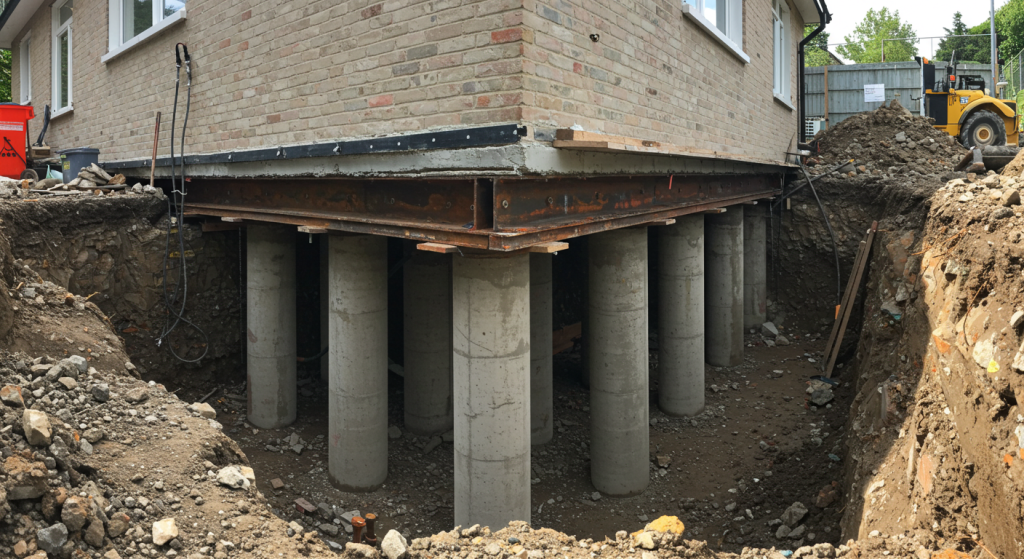
Understanding foundation underpinning is crucial for ensuring the stability and longevity of any structure. This guide provides valuable insights into various underpinning techniques, helping both property owners and construction professionals make informed decisions about maintaining and enhancing their buildings.
Understanding the Basics of Foundation Underpinning
At its core, underpinning involves various techniques targeted at either deepening or broadening the foundation to ensure stability. Here’s a look at some of the principal methods:
The Pit Method
This time-honored technique involves excavating pits beneath the existing foundation and subsequently filling them with concrete to provide much-needed support. The simplicity of this method makes it a popular choice among builders.
Mass Concrete Underpinning
Often favored for older buildings, this method entails digging a series of pits under the existing structure and filling them with mass concrete. This gradual approach serves to redistribute the load more effectively.
Beam and Base Method
In this approach, concrete beams are meticulously constructed to transfer the weight of the building onto concrete bases placed even deeper than the existing foundation. This method is particularly beneficial for stabilizing heavy structures.
Mini-Piled Underpinning
Mini-piled underpinning is the go-to method for sites where accessibility is restricted or environmental concerns hold sway. This approach utilizes small-diameter piles strategically placed to offer foundation support.
Screw Piles and Brackets
This technique is ideal for underpinning lighter structures. It employs screw piles installed at set intervals along the foundation, providing robust support while minimizing disturbances to the surrounding area.
When to Consider Underpinning
Identifying the right moment for underpinning is crucial. Here are some telltale signs that may indicate the need for this foundational remedy:
- Visible cracks in walls or noticeable unevenness in floors are classic indicators of settling.
- Changes in soil conditions, perhaps due to prolonged drought or unexpected flooding, can destabilize a foundation.
- The existing foundation may not be strong enough to support additional stories or any proposed extensions.
- Excavation or construction activities nearby might have weakened the foundational support.
Each of these scenarios calls for a thorough professional assessment to determine the most appropriate underpinning method.
The Benefits of Foundation Underpinning
Choosing to implement the right underpinning technique can yield a myriad of advantages:
- By reinforcing the foundation, underpinning helps prevent further settlement and potential structural damage.
- With proper underpinning, the foundation can adequately support additional loads, opening doors for future building extensions and renovations.
- Fortifying the foundation can significantly extend the lifespan of a structure, making it a savvy investment.
- A sound foundation ensures structural integrity, naturally elevating the property’s market value.
Choosing the Right Underpinning Method
When it comes to selecting the appropriate underpinning method, several factors come into play:
Soil Type
Different soil types demand tailored underpinning techniques to ensure effective support.
Foundation Material
The nature of the existing foundation—whether concrete, stone, or brick—can greatly influence the choice of the underpinning method.
Site Accessibility
Restricted access could limit potential underpinning methods, prompting a need for innovative approaches like mini-piling.
Budget and Time Factors
The costs and timeline associated with each underpinning technique vary widely. Understanding these financial and scheduling implications is essential for successful project execution.
Customer Experiences and Insights
For anyone on the fence about undertaking underpinning, customer reviews can provide a wealth of inspiration. Hearing firsthand accounts of how others have benefited from various underpinning solutions can offer valuable assurances regarding the effectiveness of these techniques.
Whether addressing issues in residential or commercial properties, gaining comprehensive knowledge of underpinning techniques and their applications is essential for ensuring safety and longevity. By analyzing professional resources and drawing insights from client experiences, property owners can navigate their underpinning needs with confidence and clarity.