When planning a residential landscape, understanding the various types of retaining walls is crucial for both functionality and aesthetics. These structures are essential in managing slopes, preventing erosion, and enhancing your outdoor space. In this article, we will delve into the different styles of retaining walls and their unique benefits to help you make the right choice for your project.
Understanding Retaining Walls
Retaining walls are engineered structures designed to hold back soil and manage elevation changes. They can be used in landscaping for gardens, pathways, patios, and more, providing both functionality and visual interest. Let’s explore some common types of retaining walls.
Gravity Retaining Walls
Gravity retaining walls primarily rely on their weight to resist the pressure from soil and water. Constructed from heavy materials like concrete or stone, these walls are ideal for shorter heights, commonly found in gardens and residential areas.
Key Features
- Massive structure providing stability
- Effective for low to medium height applications
- Can be aesthetically pleasing with the use of natural stone
Cantilever Retaining Walls
Cantilever retaining walls have an L-shaped design that utilizes leverage to maintain stability. Built with reinforced concrete, they are suitable for moderate to high retaining wall heights, often used in tight spaces such as highway constructions.
Advantages
- Requires less material than gravity walls
- Effective for varying soil conditions
- Can accommodate taller heights than traditional gravity walls
Counterfort Retaining Walls
Counterfort retaining walls consist of reinforced concrete walls supported by vertical counterforts that extend into the retained soil. This design enhances strength and stability, making them ideal for high-pressure scenarios.
Best Suited For
High traffic areas or locations with significant lateral pressure, such as:
- Highways
- Parking structures
- Commercial developments
Sheet Pile Retaining Walls
Comprising interlocking steel or vinyl sheets driven vertically into the ground, sheet pile retaining walls are commonly employed in waterfront situations or sites with limited space. They effectively manage soil and water, preventing erosion.
Characteristics
- Narrow profile ideal for tight spaces
- Quick installation
- Effective for water level control
Anchored Retaining Walls
For reinforced stability in conditions where significant lateral pressure is present, anchored retaining walls utilize anchored cables or rods embedded into the soil behind the wall. This type is ideal for taller walls or constrained spaces.
Features
- Resists strong lateral forces
- Allows for less material usage than traditional walls
- Suitable for steep slopes
Gabion Retaining Walls
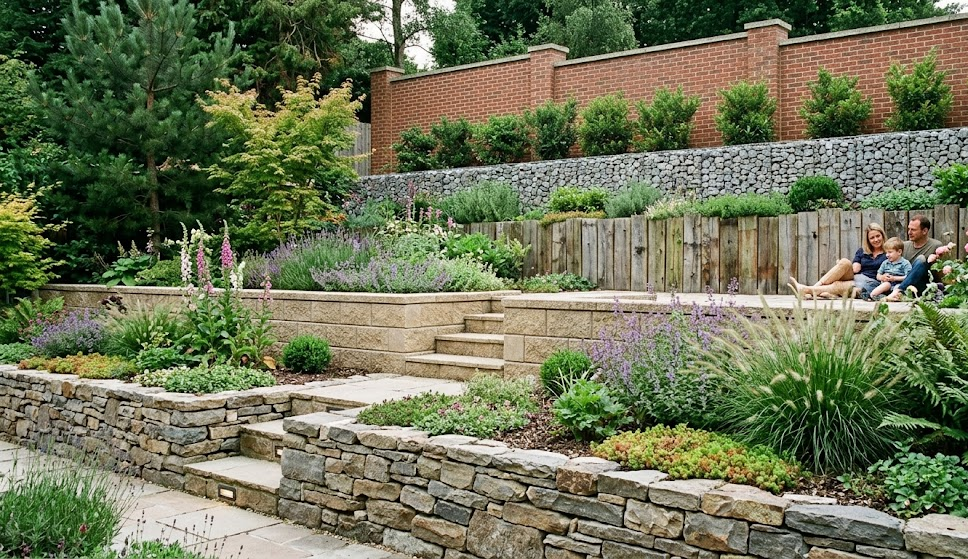
Gabion walls consist of wire mesh baskets filled with stones, providing a flexible and permeable barrier suitable for erosion control and slope stabilization.
Benefits
- Environmentally friendly, using natural materials
- Flexibility accommodates soil movement
- Can enhance the beauty of the landscape
Tied-Back Retaining Walls
Integrating horizontal tiebacks, tied-back retaining walls are designed to counteract substantial lateral soil pressure. They work well in urban settings where space is limited.
Functions
- Effective for deep excavations
- Supports tall structures with reduced footprint
- Allows for intricate landscape designs
Segmental Retaining Walls (SRWs)
Segmental Retaining Walls are modular systems made from individual interlocking units. Their design allows for versatility in wall formation and aesthetically pleasing layouts suitable for landscaping.
Advantages of SRWs
- Ease of installation
- Adaptability to various designs
- Low maintenance requirements
Choosing the Right Retaining Wall for Your Project
Selecting the appropriate retaining wall type for your residential project depends on various factors, including:
- Soil condition
- Wall height and design
- Available space
- Aesthetic preferences
- Budget considerations
For more information and guidance on lawn and landscape maintenance, visit this resource.
Should you need detailed insights into specific wall types or applications, consider exploring further through the following articles:
- Unlocking Your Dream Outdoor Oasis
- Innovative Uses for Concrete Slabs
- Plain Concrete: The Timeless Choice
- Retaining Walls
When planning your residential project, choosing the right retaining wall can significantly impact both functionality and aesthetics. Consulting with an expert in landscaping or construction will ensure that you select a retaining wall that meets your specific needs while enhancing your outdoor space.