
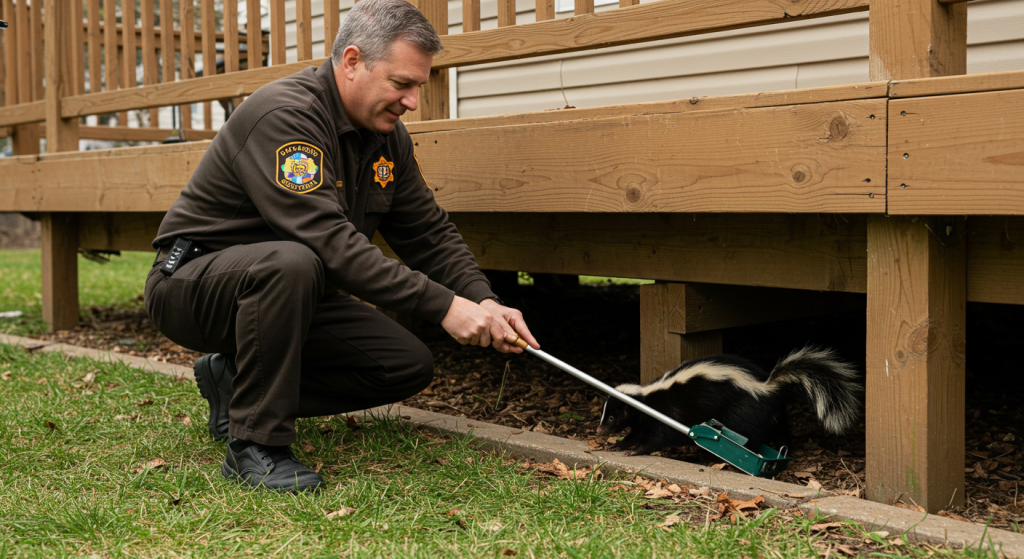
Homeowners often find themselves at a crossroads when confronted with the challenge of skunks invading their properties. These nocturnal creatures, while fascinating in their own right, can swiftly turn into a nuisance, causing damage to gardens and potentially introducing risks to human health. This article delves into the various approaches and considered techniques for skunk removal.
Understanding Skunk Behavior for Effective Removal
Gaining insights into skunk behavior is essential for successfully managing skunk problems. Skunks are nocturnal and ocularly guided by a strong sense of smell, which they use to locate food and establish territory. They tend to inhabit areas rich in accessible food sources, often venturing into residential gardens, urban backyards, and agricultural spaces. These creatures are opportunistic omnivores, meaning they will forage for anything from insects and small mammals to pet food left outside.
Skunk territorial behavior is particularly noteworthy; they can cover significant distances to find food, often within a two-mile radius of their dens. Their ability to communicate using scent markings and vocalizations adds complexity to their social interactions, frequently leading to territorial disputes among them. For homeowners trying to prevent skunk incursions, understanding these behaviors can help target specific aspects of skunk management effectively.
Infestations often happen because of easily accessible food sources left unattended. Leaving pet food outdoors, not securing garbage bins tightly, and allowing fallen fruit to litter the yard can turn a residential property into a prime target for skunks. By recognizing what attracts skunks, homeowners can close off these avenues, adopting a more proactive approach.
Humane Trapping Methods for Skunks
When dealing with a skunk problem, humane trapping emerges as one of the most preferred solutions. Employing live traps allows for the safe capture of skunks without causing harm. These traps are typically designed to be spacious enough for the animal, allowing them to enter without injury. The use of a trap should be complemented with attractive bait, such as canned tuna or peanut butter, which can entice skunks more effectively than other types of bait.
Strategically placing traps in high-traffic areas is essential to improve the chances of success. Observing where skunks are most active—often near food sources or potential nesting spots—can inform where you should set your traps. It is also important to monitor traps regularly; checking them twice a day minimizes stress for the captured skunk and ensures timely relocation.
Upon successfully trapping a skunk, the next steps involve safely handling the trap and preparing for relocation. It is recommended to cover the trap with a cloth to help calm the skunk during transport. Releasing the skunk at least five miles away from your property is crucial, as this distance helps prevent the skunk from finding its way back. Consulting local wildlife agencies beforehand can provide insights into legal relocation sites that ensure the skunk’s well-being.
Preventative Measures to Keep Skunks at Bay
Taking preventative action against skunks is essential for maintaining a peaceful living environment and minimizing future problems. The first line of defense lies in securing trash and food sources. Homeowners can invest in animal-proof garbage cans and ensure that compost is well-sealed to deter skunks from foraging in their yards. Properly managing food spills—such as promptly cleaning up pet food and leftover birdseed—reinforces the effort to make properties less attractive to skunks.
Implementing physical barriers can also yield significant results. Installing fences that are at least three feet high and buried a foot underground discourages skunks from digging underneath. Additionally, motion-activated lights can create an unwelcoming environment for these nocturnal creatures, as skunks prefer darker conditions.
Utilizing natural repellents—such as strong-smelling essential oils or commercial repellents that replicate predator scents—can further dissuade skunks from entering your property. Regularly inspecting the property for potential skunk dens and removing areas where skunks might hide will actively contribute to preventing future encounters.
Choosing humane skunk removal methods ensures the safety of both the animals and your property. By working with wildlife control experts and using ethical strategies, you can resolve skunk issues responsibly—protecting your home while respecting local wildlife.