Dead trees pose significant threats to property safety, creating potential hazards for homes, occupants, and nearby structures. Properly addressing these risks through effective removal strategies is vital for maintaining a secure environment. This article delves into the essentials of dead tree removal, the protective measures involved, and how maintaining a safe landscape benefits everyone.
Understanding the Risks of Dead Tree Removal
Recognizing dead tree hazards is the first step towards ensuring property safety. As trees decay, their structural integrity diminishes, increasing the likelihood of falling during storms or strong winds. This can lead to severe damage to homes, vehicles, and even pose threats to personal safety.
Identifying Dead Trees
Before embarking on a removal project, you should confirm the status of the tree. Here are key indicators:
- Brittle branches that snap easily
- Absence of leaves during the growing season
- Cracking bark or visible decay and cavities in the trunk
- Fungi or mushrooms growing at the tree’s base
Evaluating these signs can help prevent the unnecessary removal of trees that may still be alive. Consult a certified arborist if you have any doubts to conduct a thorough tree health assessment.
Preparing for Tree Removal
Once you’ve confirmed a tree is dead, preparing for safe removal is essential. Begin by assessing the environment, considering factors like accessibility for equipment, potential impacts on neighboring properties, and the tree’s size. This initial evaluation guides your approach and safety measures.
Safety Precautions During Dead Tree Removal
Safety should always be the top priority. Ensure you have:
- A clear escape route in case of unexpected falls
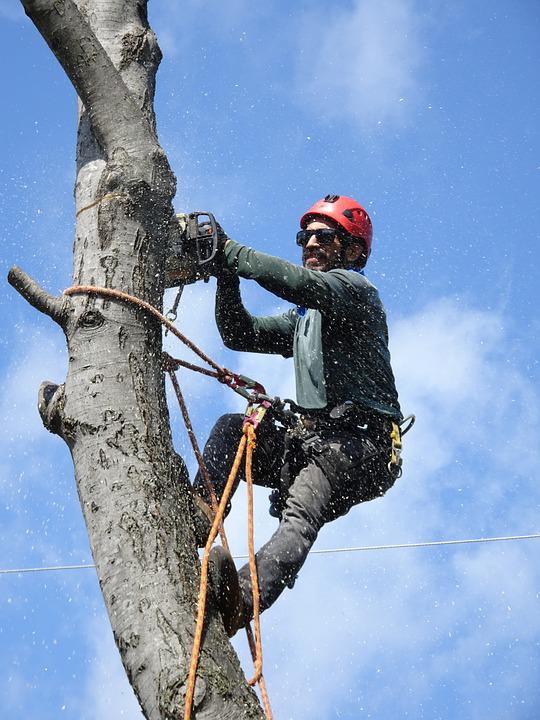
- Personal protective equipment (PPE) including hard hats, safety glasses, and steel-toed boots
- Proper tools such as chainsaws and ropes
If you’re uncertain about your ability to safely carry out tree removal services, considering hiring a professional may be the best course of action.
The Process of Removing a Dead Tree
Effective dead tree removal involves several critical steps to ensure both safety and efficiency. Here’s a breakdown of the process:
Preparing the Area
Start by preparing the space around the tree. This means:
- Clearing any obstacles or valuable items
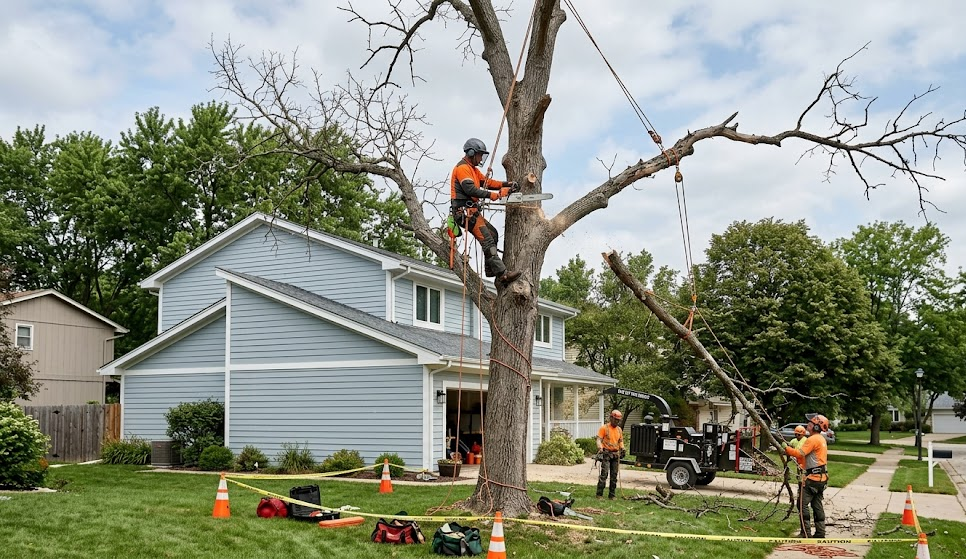
- Establishing a safety perimeter
- Identifying the planned direction of the tree’s fall
Properly preparing the area is instrumental in preventing accidents and facilitating a smooth operation.
Removing Lower Branches and Felling the Tree
Begin removing lower branches using a chainsaw, making an undercut followed by a back cut to control their fall. Once lower branches are down, proceed to felling the main trunk:
- Make a notch cut on the side facing the direction of the fall.
- Create a back cut slightly higher, allowing the tree to fall in the desired direction.
Be swift and utilize a previously established escape route as the tree begins to fall.
Post-Removal Considerations
After the tree is down, dealing with the stump is crucial. Options include:
- Grinding the stump below ground level.
- Chemical treatments to accelerate decay.
- Filling the hole and planting grass or ground cover to restore landscape aesthetics.
Proper stump removal not only contributes to neat yard cleanup but reduces risks of trip hazards and pest infestations.
When to Call in Professionals
Despite the potential for DIY efforts, several scenarios warrant professional intervention. These include:
- The tree is large or poses a risk to nearby structures.
- The task requires specialized equipment.
- The tree is too close to power lines.
Hiring a certified arborist ensures that complex removals are handled efficiently and safely, protecting both property and individuals.
Preventing Future Tree Hazards
A proactive approach to tree maintenance can significantly reduce the need for future removals. Strategies include:
- Regularly consulting an arborist for health assessments.
- Properly watering and fertilizing trees to maintain their health.
- Timely pruning of dead or diseased branches.
Investing in tree health management not only improves landscape aesthetics but can also contribute to storm damage prevention and fire risk reduction. A healthy tree is less likely to succumb to disease or extreme weather.
Final Thoughts on Property Safety
Removing dead trees and maintaining a safe landscape are vital aspects of property management. Whether you choose to tackle the job yourself or enlist professional help, focusing on safety and best practices is imperative. Ultimately, a well-kept yard enhances property value and reduces hazards.