When it comes to construction sites, rooftops, walkways, and elevated workspaces, guardrails play a crucial role in protecting workers, residents, and pedestrians from dangerous falls. In Canada, strict safety standards regulate the design, installation, and maintenance of guardrail systems to ensure compliance and, more importantly, to prevent injury.
What Is a Guardrail?
A guardrail is a safety barrier installed along open edges, such as balconies, stairs, roofs, or platforms, to prevent people from falling. In the construction industry, temporary guardrails are often used during projects, while permanent structures are found in homes, public buildings, and industrial settings.
Guardrails are part of what’s called fall protection systems, which include other safety measures like harnesses and netting. However, guardrails are passive systems—meaning they protect people without needing them to actively use equipment.
Canadian Building Code Requirements
The National Building Code of Canada (NBCC) provides guidelines for the construction and installation of guardrails. Provinces and territories often adopt or modify this code slightly, but the fundamentals remain the same:
-
Minimum Height: Guardrails must be at least 1,070 mm (42 inches) high for commercial or industrial settings and 900 mm (36 inches) high in residential applications like decks or stairs.
-
Spacing: Openings between balusters (vertical posts) must be small enough to prevent a 100 mm (4 inches) sphere from passing through, to protect children and pets from slipping through.
-
Strength: Guardrails must be able to withstand a load of 0.75 kN/m (about 75 kg per metre) applied horizontally, as well as a concentrated load at any point.
These standards aim to ensure that guardrails can resist typical forces caused by people leaning or pressing against them.
Where Guardrails Are Required
Guardrails must be installed anywhere there is a risk of falling from one level to another. Common areas where guardrails are mandatory in Canada include:
-
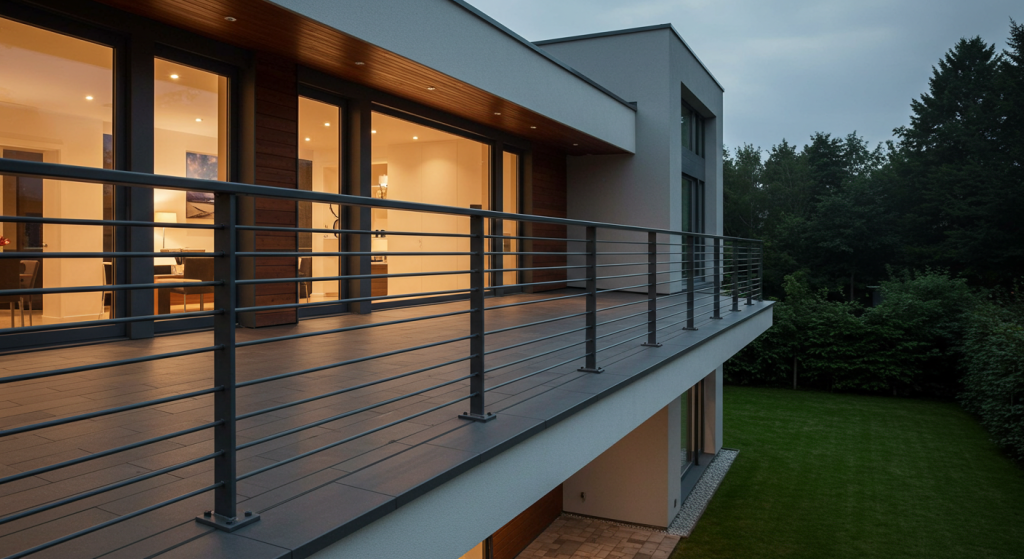
Elevated decks or balconies over 600 mm (2 feet) from the ground
-
Stairways and ramps
-
Rooftops or roof hatches with maintenance access
-
Mezzanines and raised platforms in industrial buildings
-
Trenches and pits on construction sites
In construction zones, temporary guardrail systems must be erected as soon as a floor or roof structure is in place if there is an unprotected edge. Delays in doing so can lead to both serious injuries and fines from safety regulators.
Residential vs. Commercial Guardrail Standards
While the overall goal—fall protection—is consistent, the application differs between residential and commercial properties.
-
Residential guardrails focus more on aesthetics and tend to allow for more design flexibility, as long as safety is not compromised. Glass panels, metal railings, and wood are all common materials.
-
Commercial or industrial guardrails are more utilitarian and must meet higher durability and load-bearing standards, especially in environments with heavy foot traffic or machinery.
Understanding the category your property falls into is key to choosing the right system.
Maintenance and Inspection
Even the best-installed guardrail systems require regular maintenance. Weather exposure, physical wear, and building settling can weaken structures over time. Here’s what to watch for:
-
Loose or wobbly posts
-
Rust or corrosion on metal rails
-
Cracks or warping in wood
-
Chipped or unstable glass panels
-
Missing or damaged fasteners
Workplace safety inspectors or building managers should inspect permanent and temporary guardrails regularly, especially after extreme weather conditions or construction work nearby.
Legal Responsibility and Compliance
Failure to follow Canadian guardrail standards can result in fines, work stoppages, or even legal liability in the event of an accident. In Ontario, for instance, the Occupational Health and Safety Act (OHSA) and Ministry of Labour regulate construction site guardrails and mandate their use.
Homeowners renovating decks or balconies should also secure permits and have their designs approved, especially if the work involves raising the structure or changing its footprint.
When to Call a Professional
Guardrail systems may seem simple, but their installation must meet precise measurements and strength requirements. Whether you’re working on a high-rise or a small backyard deck, it’s a smart idea to consult a licensed contractor or building code expert before proceeding.
Professionals can ensure that the system complies with provincial regulations and performs safely under real-life conditions. They’ll also be able to recommend materials, styles, and layouts that suit your property and budget.
Guardrails are more than just structural add-ons—they’re a vital component of safety in both residential and commercial spaces.