Welcome to our comprehensive guide on the AFS Rediwall® installation process. This innovative permanent formwork walling system simplifies constructions for a variety of applications, from retaining walls to foundation structures. Whether you’re a seasoned builder or a DIY enthusiast, our step-by-step overview will equip you with the knowledge needed to successfully install AFS Rediwall.
Understanding AFS Rediwall® System
The AFS Rediwall system stands out due to its versatility and range. Offering several product configurations such as RW110, RW156, RW200, RW256, RW275, and RW300 mm, this walling system caters to diverse project needs. From retaining walls to landscaping applications, its usage is on the rise, particularly in retirement villages, medium-density housing, and upscale homes.
Benefits of Using AFS Rediwall
- Speed of Installation: Designed for ease, builders can quickly install the panels themselves, reducing reliance on contractors.
- Durability: As a modern alternative to traditional blockwork, Rediwall boasts heightened longevity and strength.
- Cost-Effective: The system minimizes labor costs and accelerates project timelines, providing substantial savings in the long run.
Preparation for Installation
Preparation is key to a successful installation. Begin by gathering all the necessary equipment by consulting the AFS Installation Guide, which offers detailed instructions tailored for the Rediwall system.
Once equipped, the first step is to strategically position the AFS Rediwall floor track over the starter bars at the desired location. This track is then securely fixed to the concrete footing or slab using a masonry anchor. It is imperative to consult the Installation Guide regarding the appropriate water treatment measures for cold joints to prevent potential issues down the line.
Installing AFS Rediwall Panels
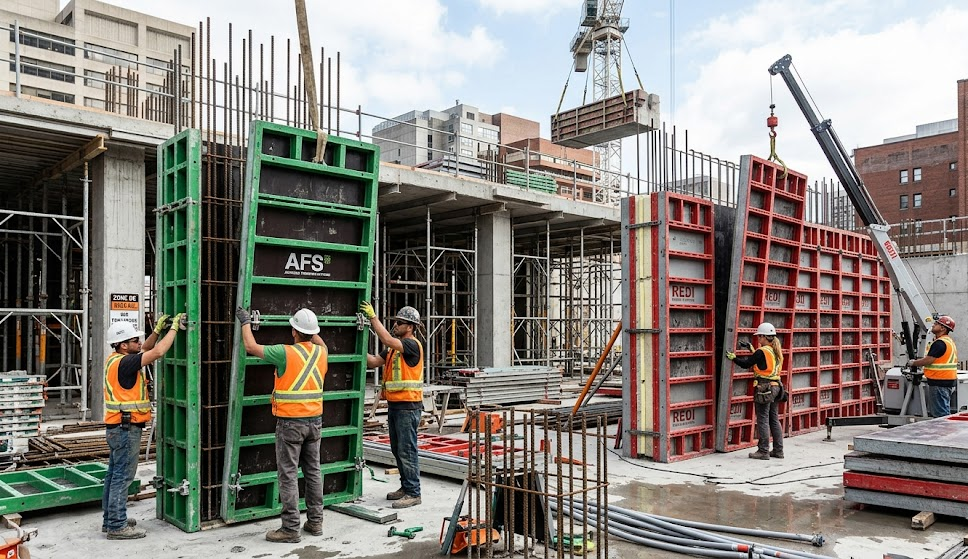
With the floor track firmly in place, it’s time to install the AFS Rediwall panels. If you are dealing with corners, start there and work your way outward. Simply position the Rediwall panel over the floor track and starter bars, ensuring a snug fit by sliding or clipping the panels into place. This ensures stability as you progress with the installation.
Propping and Bracing the Panels
Maintaining structural integrity during installation is crucial. As you install the panels, propping is necessary to keep them plumb and aligned. This involves attaching a horizontal brace—such as a Top Hat or LVL timber—within the top third of the panels. Use light gauge adjustable braces anchored to the slab or concrete deadmen, securing them to the horizontal brace. Adjust the braces to ensure everything remains straight as you continue.
Reinforcement Installation
Proper reinforcement is vital for the success of any construction project. Following the construction protocol, reinforcing elements should be added in accordance with the engineer’s specifications. As you secure more Rediwall panels, slide horizontal reinforcing bars into the designated holes. Next, position vertical reinforcing bars through the Rediwall profiles, adjusting them to the pre-specified locations at the top of each panel. For additional reinforcement solutions, such as U bars and hook bars, always refer back to the installation guide for precise placements.
Core Filling with Concrete
Once installation and reinforcement are complete, it’s time for core filling. The Rediwall system demands a meticulous concrete mix and application method for optimal results. For specific recommendations, engage with your AFS representative.
Utilizing a boom pump equipped with a 50mm hose, start pouring concrete from the corners of each wall, gradually moving towards the center. During this process, employing a concrete vibrator ensures an even fill, reducing the likelihood of air pockets forming. After the walls are filled, act quickly to clean any concrete splatter before it hardens.
Finally, it’s essential to withhold prop removal until you receive approval from the structural engineer. This ensures the integrity of the installation is maintained as the project progresses.
In summary, installing AFS Rediwall systems offers a practical and efficient solution for various construction needs. For optimal results and to ensure compliance with engineering specifications, it’s advisable to consult with a professional expert in wall systems to guide you through the installation process.