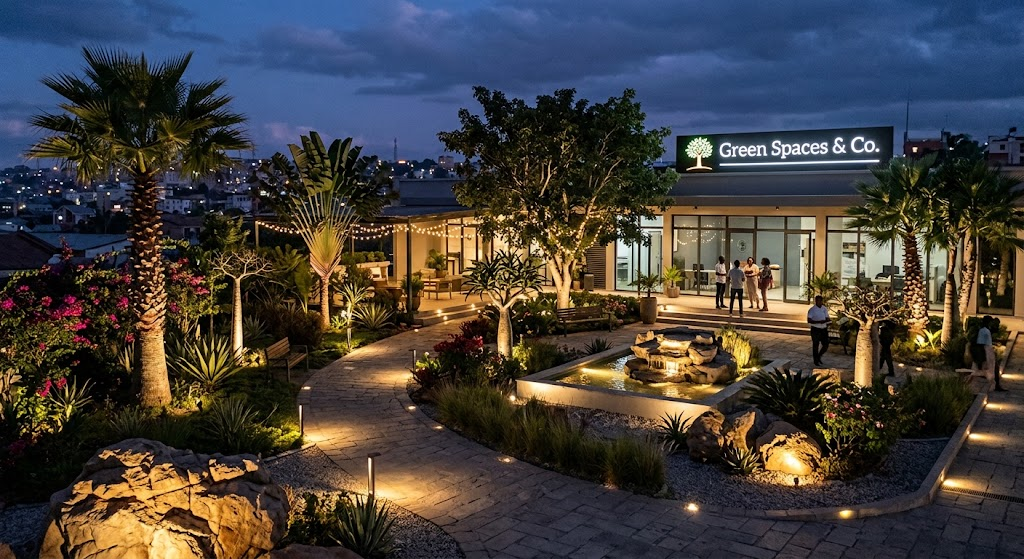
Commercial landscape lighting 💡 does more than extend visibility after dusk: it shapes how people experience entrances, paths, planting, façades, and gathering areas. A considered scheme combines safety with visual character, guiding pedestrians while drawing attention to the features that give a property its identity. 🌳✨
Designing Outdoor Lighting Around Landscape Features 🌿
Begin by identifying which areas need clear visibility and which deserve a more subtle visual emphasis. Pathway illumination can help people navigate changes in level, while architectural lighting gives entrances and façades definition; restrained feature lighting can then add depth without making the site feel overlit. 🚶
A layered approach also helps distinguish practical tasks from decorative effects. Bollards and area lights can support pedestrian movement, while carefully aimed accent lighting brings trees, signs, or textured surfaces into view. For broader planning context, see these ideas for effective commercial landscaping. 🌱
Selecting Fixtures for Commercial Outdoor Lighting 🔦
Fixture choice should follow the purpose of each area, its scale, and its exposure to weather. Commercial outdoor lighting often combines several types, each delivering a distinct distribution of light rather than competing for attention.
Common options and their roles include:
-
Bollard and pathway fixtures 🚶 define pedestrian routes and help reveal steps or changes in surface.
-
Floodlights and area lights 💡 provide wider coverage for parking areas, service zones, and open grounds.
-
Spotlights and accent fixtures 🎯 direct attention toward signs, planting, and selected architectural details.
-
Wall-mounted luminaires 🏢 illuminate entrances and building edges while contributing to the overall design.
Professional-grade equipment is designed for outdoor exposure, but project requirements still matter: mounting height, beam spread, glare control, and local regulations should inform selection. A photometric analysis can model how light will fall across the site before installation, helping refine coverage and reduce spill. 📐
| Landscape Feature | Lighting Approach | Design Consideration |
|---|---|---|
| Walkways 🚶 | Low-level pathway illumination | Maintain consistent visibility without glare |
| Building façade 🏢 | Architectural lighting or wall-mounted fixtures | Emphasize form while respecting nearby properties |
| Trees and planting 🌳 | Tree uplighting and accent lighting | Aim carefully to avoid harsh, upward spill |
| Ponds or fountains 💧 | Water feature lighting | Use fixtures suitable for the specific installation |
Balancing Visual Impact, Safety, and Efficiency 🌟
Strong visual effects depend on restraint. Tree uplighting can reveal canopy shape and add depth, while façade lighting can clarify an entrance or highlight a distinctive surface; water feature lighting adds movement and reflection when the location and fixture are suitable. Each effect should support the property’s character, not overwhelm it. 🌲
Safety and comfort also rely on controlling contrast. Bright sources aimed toward drivers, neighbouring windows, or pedestrians can cause glare, so use appropriate optics and direct beams only where needed. Guidance on commercial landscape design can help connect lighting choices with the wider visitor experience. 👀
Improving Performance With LED Lighting and Controls ⚡
Energy-efficient lighting is a practical foundation for commercial sites because LED fixtures can reduce electricity use and maintenance demands compared with many traditional sources. Available colour temperatures and optical distributions also make it easier to create an appropriate mood without sacrificing usable visibility. 💡
Controls can further tailor operation to opening hours and site activity. Dimming, timers, or compatible sensors may limit unnecessary illumination, provided they are selected to suit the property and applicable safety requirements. The best savings come from matching output to real needs rather than simply reducing brightness everywhere. 🌙
Before installation, review the site layout, intended atmosphere, security priorities, and maintenance access. A professional landscaper can coordinate fixture selection, photometric planning, and installation so the finished scheme performs as intended across changing weather and seasons. 🛠️🌿